
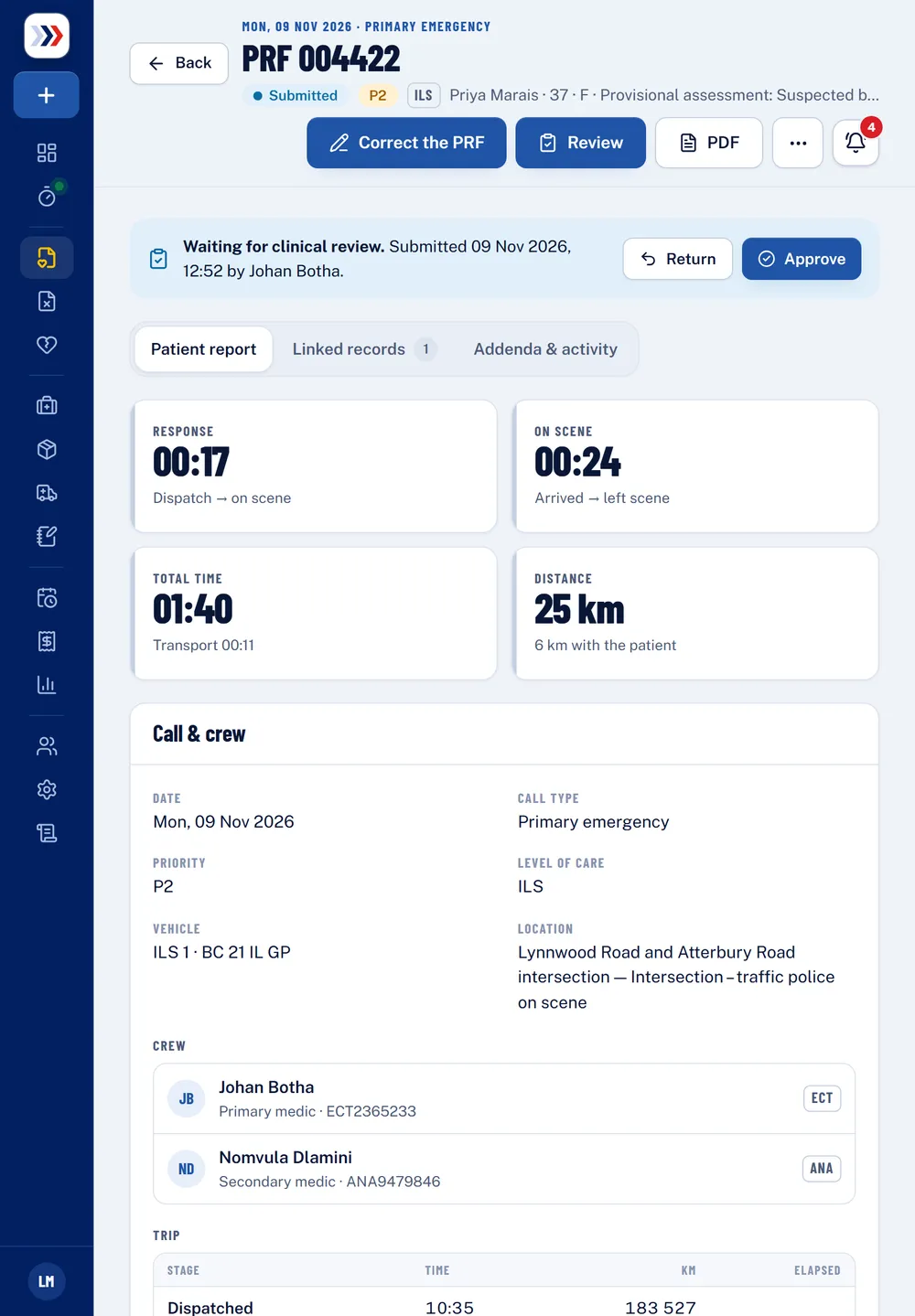
What it does
Everything the paper PRF did — and what it never could
An electronic PRF (ePRF), also called an electronic patient care report (ePCR), replaces the carbon-copy book. EMS Relay’s is built for a phone in the back of a moving ambulance.
Works without signal
The PRF saves on the phone as the crew works and sends itself the moment the signal is back.
Nine guided steps
Call and crew, patient, billing, presentation, surveys, vitals, treatment, handover, sign and submit — with a list of what is still missing.
Scan the ID or the sticker
A smart ID card’s barcode is read on the phone. Hospital stickers, medical aid cards, ID books and licences are read from a photo, and every detail is ticked before use.
SA ID numbers checked
The check digit and the date are verified and fill in the date of birth, age and gender.
Ready-written notes
Clinical templates for 80+ presentations at BLS, ILS and ALS level, with the mechanism of injury, ICD-10 and cause codes. Every word stays editable.
Speak instead of type
Tell us what happened: speak the whole call once and the PRF’s steps fill in, each detail ticked by the crew. Any notes field can be dictated too.
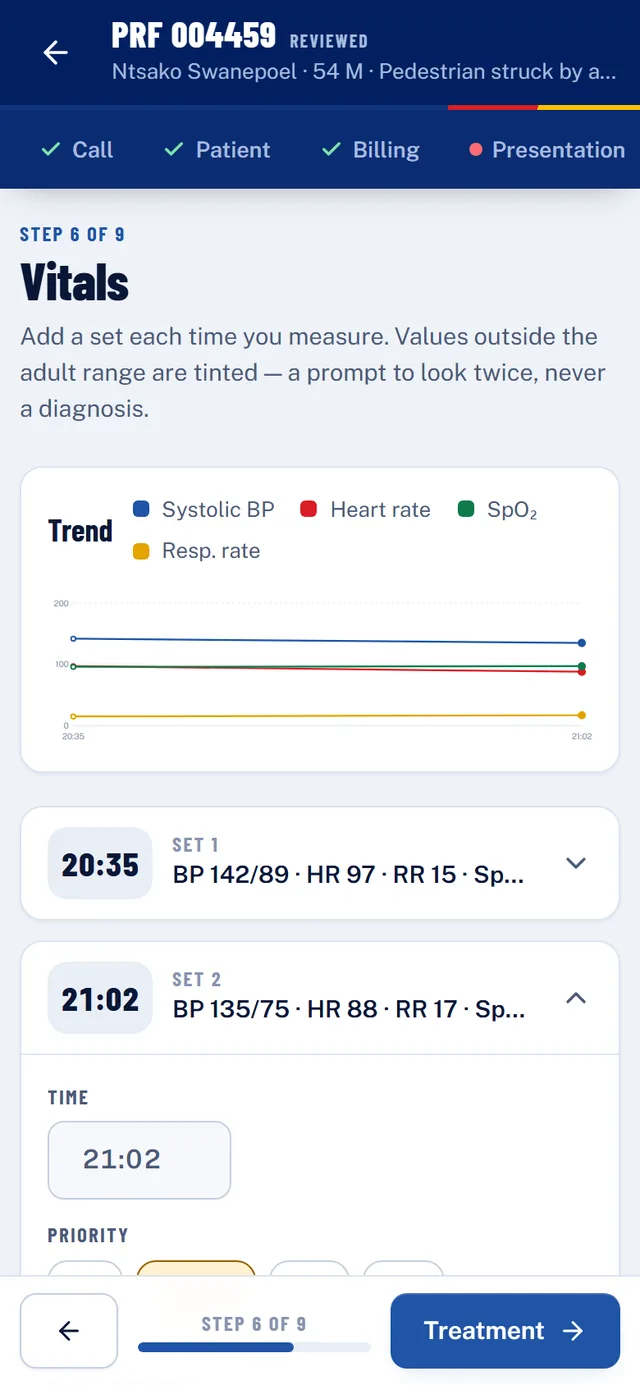
Vitals that make sense
Sets of vitals with GCS, a trend chart and out-of-range flags. Trip times and odometer give response, on-scene and transport times.
Drugs signed out from the PRF
A dose given is signed out of the vehicle’s drug box from the PRF itself — one entry in the controlled drug register, linked to the patient.
Signatures and a PDF
The crew, the patient and the receiving clinician sign on screen. The PDF is ready for the hospital and the medical aid.
Sealed when submitted
Each submitted PRF is locked with a digital fingerprint. Changes after that are addenda, and a clinical reviewer approves or returns it.
Your numbers carry on
PRF numbers continue from your current system, and refusals and declarations of death start from the PRF with the patient copied in.
Every crew member, every device
Runs in the browser on Android, iPhone, tablets and PCs — add it to the home screen like an app. Nothing to install or maintain.
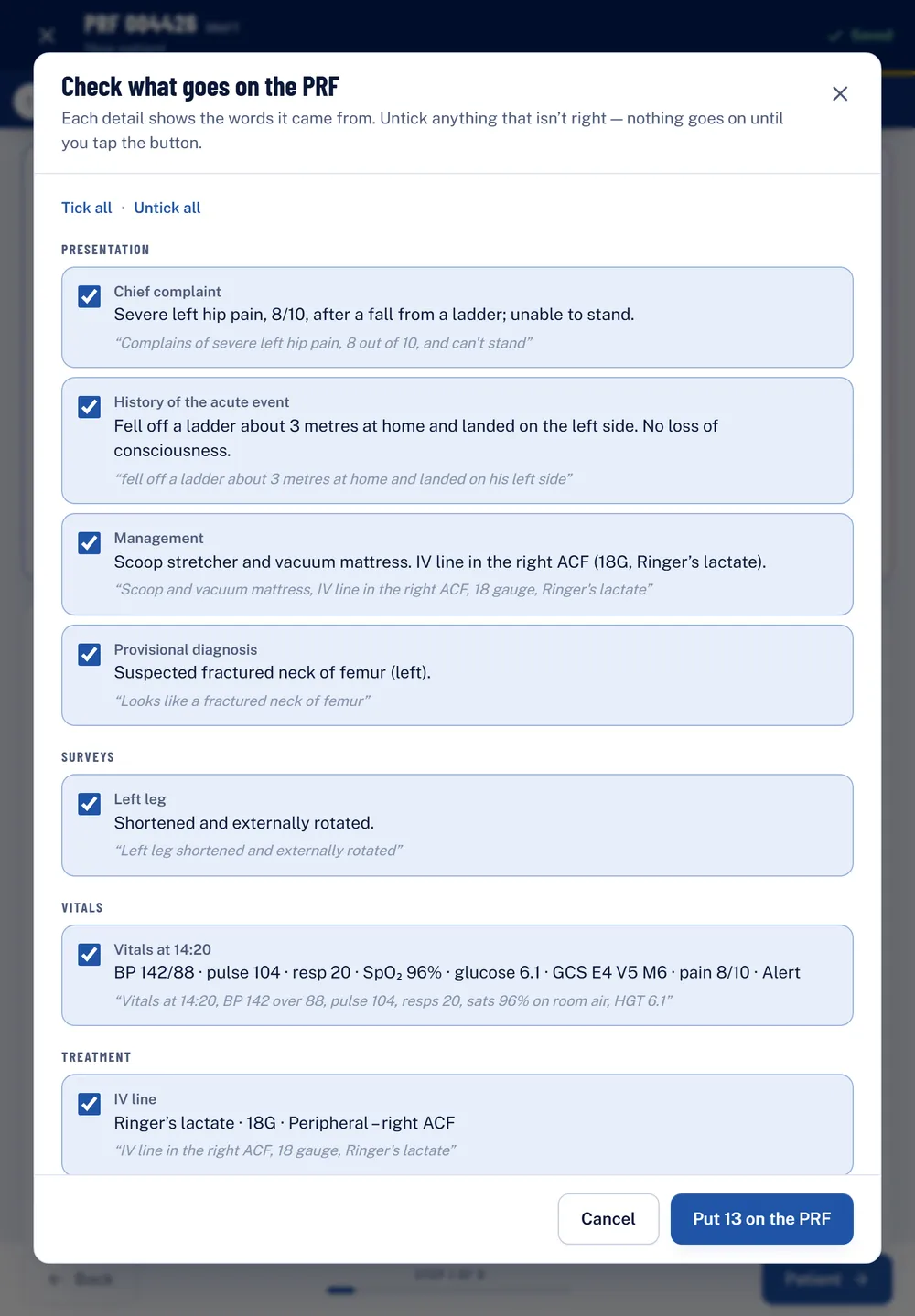
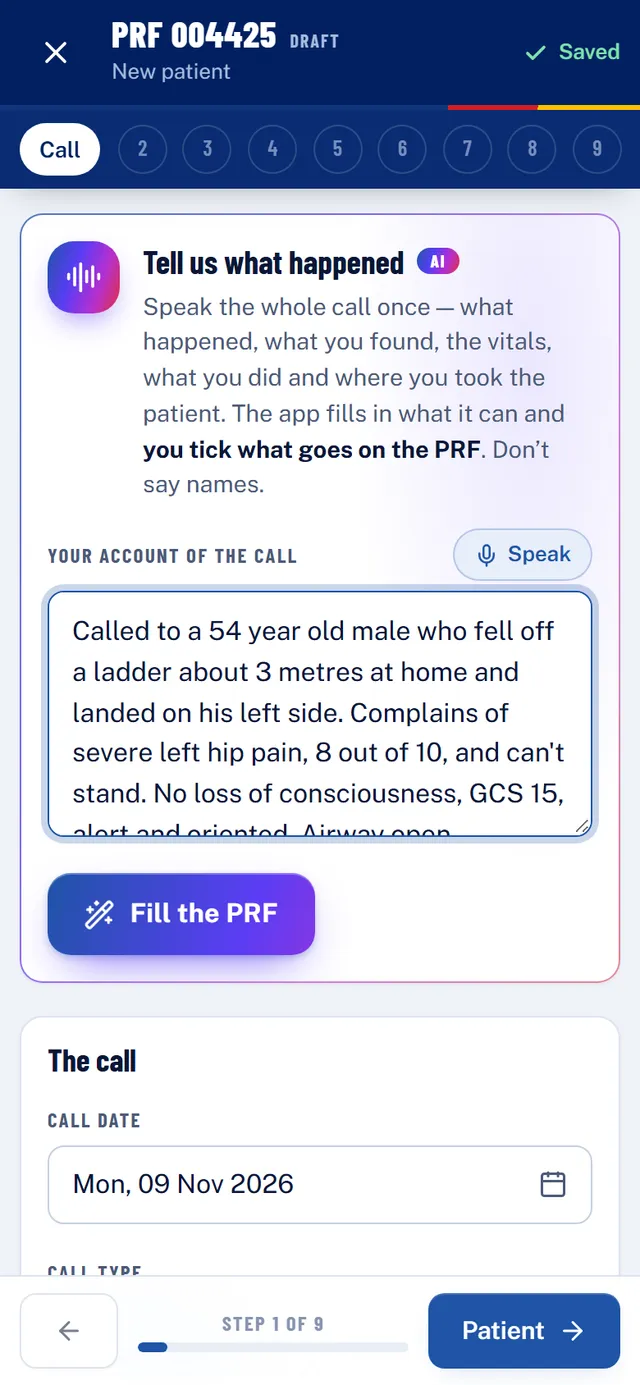
Tell us what happened AI
Speak the call. The PRF fills itself.
- Tap Speak and tell the whole call once — the phone turns speech into text, or type it. Names stay out.
- The presentation, primary and secondary survey, vital signs, IV lines, equipment and handover fill in from what was said.
- Each detail shows the words it came from. Listed answers must be on your lists and every number must have been said — anything else is left out, and the crew is told what.
- Medication is only listed as a reminder: drug-box doses are signed out of the register, never filled in by AI.
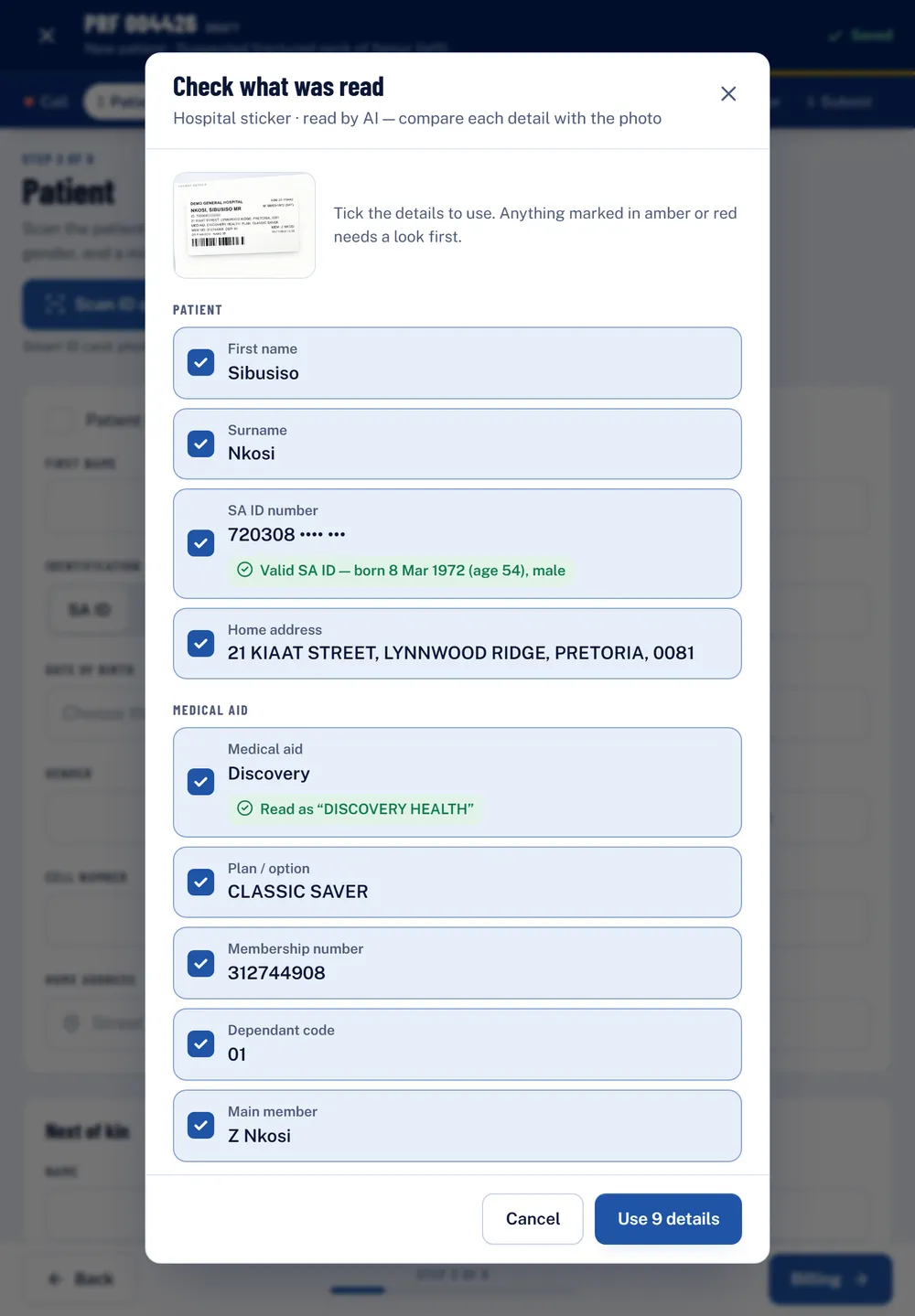
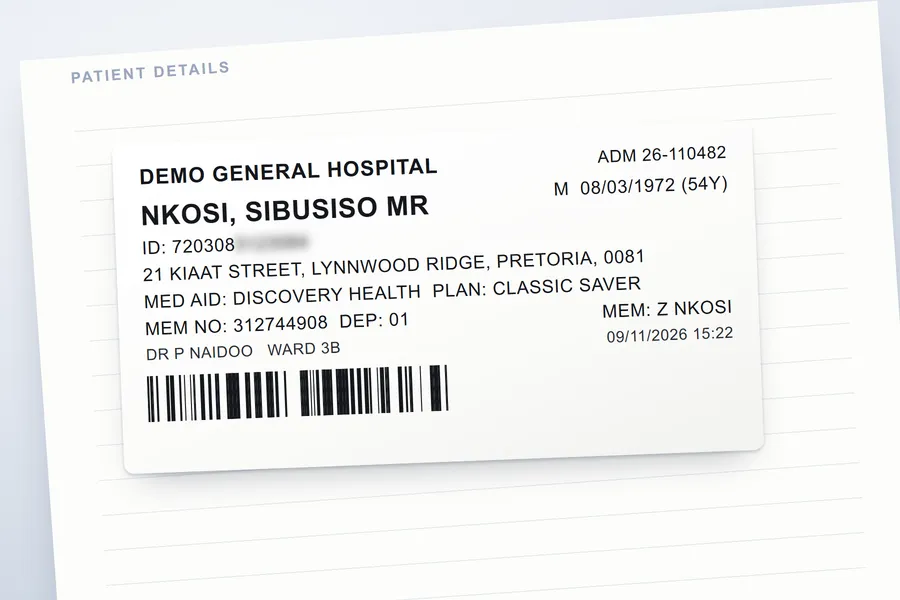
Scan the sticker or the ID AI
The patient’s details in seconds, not minutes
- The barcode on the back of a smart ID card is read on the phone — exact, with no signal and nothing sent.
- Hospital stickers, medical aid cards, ID books, licences and passports are read by AI from a photo — any hospital’s layout.
- The ID check digit, the cell number, the medical aid and the hospital are checked, and anything unsure starts unticked.
- The sticker photo can stay on the PRF, like the paper sticker did; photos of ID and medical aid cards stay in the app for the office.
Questions
Good to know
What is an electronic PRF?
An electronic PRF (ePRF) is the patient report form on a phone or tablet instead of paper. It is also called an electronic patient care report (ePCR). EMS Relay’s electronic PRF guides the crew step by step, checks what is missing, and sends the finished report to the office for clinical review and billing.
Does the electronic PRF work without signal?
Yes. Everything the crew enters is saved on the phone straight away, and the PRF sends itself when the signal returns. Nothing is lost if the phone loses signal in a basement or on the N1.
Can we keep our current PRF numbers?
Yes. Numbering continues from your current system, so the next PRF on EMS Relay follows the last one on paper or in your previous software.
Which phones and tablets does it run on?
Any modern Android phone, iPhone, tablet or PC with a web browser. Crews add it to the home screen and it opens like an app.
Can crews scan the patient’s ID or hospital sticker?
Yes. The barcode on the back of a smart ID card is read on the phone itself, even without signal. Hospital stickers, medical aid cards, ID books, licences and passports are read from a photo by AI in a few seconds. The crew sees each detail next to the photo and ticks what goes on the PRF.
Can the crew speak the PRF instead of typing it?
Yes. With “Tell us what happened”, the crew speaks the whole call once and EMS Relay fills in the presentation, surveys, vital signs, IV lines, equipment and handover — each detail showing the words it came from, ticked by the crew before it goes on. Any notes field can be dictated too.
Is the AI optional?
Yes. The AI that writes the notes or fills the PRF from the crew’s spoken account stays off until a manager switches it on, and reading stickers and cards from a photo can be left off too. Names are taken out of a spoken account before it is sent, and the crew checks every detail before it goes on the PRF.
See the electronic PRF on your own phone
A 30-minute walkthrough using your call types, medical aids and tariffs. No obligation.